

Pride and (In)Visibility: Malta’s LGBTIQ+ Migrant Paradox
by Mehk Chakraborty
July 2025
Abstract: This investigation and documentary trace the unacknowledged rift between Malta’s progressive LGBTIQ+ reputation and the lived realities of LGBTIQ+ migrants who inhabit the Mediterranean island on the border of the EU. Systemic neglect and discrimination is revealed through the intimate testimonies of five individuals—spanning Turkey, Southeast Asia, Colombia, Egypt, and South Asia. The story reveals a Malta where Legal Gender Recognition (LGR), healthcare access, labour protections, and asylum conditions fracture along lines of race, class, and migration, even as migrants find safety and security in the island they long to call home.
[The article is published in its original language, however the S-INFO website is a multilingual platform: click on the button at the bottom-left of your screen to read the story in French, Dutch, Italian, Maltese or Romanian.]
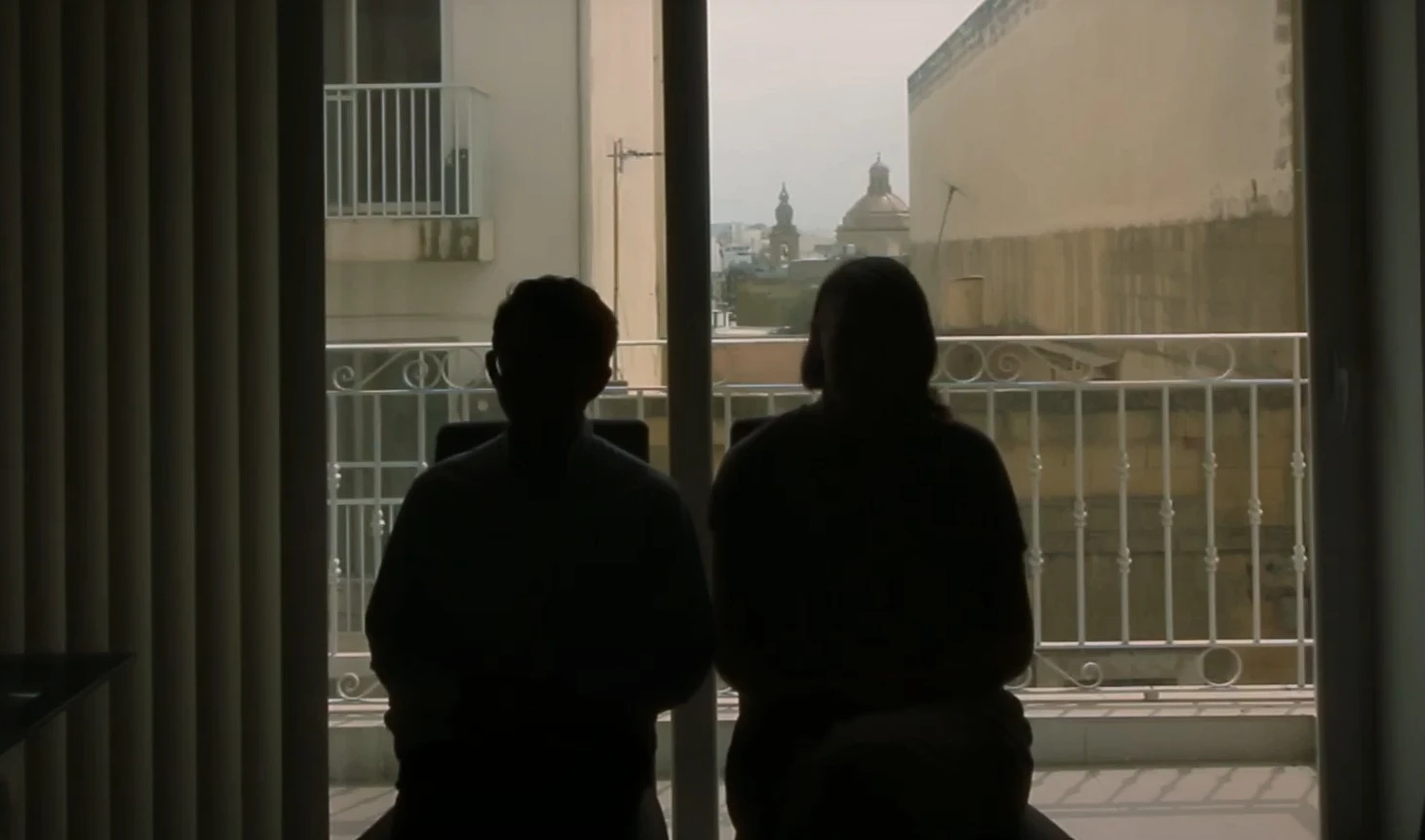
“I am very invested in being here. I wish that Malta equally invested in me,” shared Miles*, a Southeast Asian trans man who lives in Malta with his European wife, Clara. Miles, who is among the LGBTIQ+ migrants residing in Malta, echoes a sentiment shared by several in the community.
Malta’s laws concerning LGBTIQ+ individuals overall have earned it the first rank on the International Lesbian, Gay, Bisexual, Trans and Intersex Association’s Rainbow Map for Europe consistently for more than 8 years now. Malta has been celebrated by locals and foreigners alike for its open, laid-back atmosphere for the LGBTIQ+ community.
Miles and Clara moved to Malta with the hope of finding shelter in this island at the end of 2022, after trying to live in Miles’ home country far away in Southeast Asia, Clara shared, “The climate was getting more and more hostile towards LGBTIQ+ people and towards migrants in his home country.”
They first tried Clara’s homeland in the European Union, but quickly needed an alternative because it was facing a severe housing crisis, and, as Clara added, “He couldn’t access gender affirming healthcare back in my home country.” She elaborated, “So that’s when we learned about Malta being top of the list that year for gender affirming healthcare. And we visited and checked it out, and very swiftly moved here after.”
Malta may have gained a positive reputation for its LGBTIQ+ policies, however, a deeper look into the island’s reality reveals that the rainbow flag that flies freely in Malta tends to leave out a large population on whose contribution the island is dependent: non-EU migrants.
In response to a Freedom of Information request, the Human Rights Directorate (HRD) of Malta shared that it is “deeply committed to supporting LGBTIQ+ migrants through an intersectional approach that recognises the complex challenges they face.” A European Commission Against Racism and Intolerance (ECRI) country report on Malta from 2024, however, noted that there are multiple, overlapping laws in Malta around racial discrimination and discrimination based on sexual orientation, gender identity, and sex characteristics. Further, ECRI stated, “None of the legislative acts cover discrimination based on the ground of citizenship or language,” adding there were “significant gaps in the protection against racial and other forms of discrimination,” resulting in “difficulty for victims of discrimination to make effective use of the legal remedies provided to them.”
The Right to Legal Gender Recognition (LGR) is an example of this overlap and discrimination. Malta’s Gender Identity, Gender Expression and Sex Characteristics Act in practice allows only Maltese citizens to benefit from the right to gender identity. This means that non-Maltese people, including non-EU citizens and even spouses of citizens of the European Union, such as in the case of Miles, are unable to have their personal and official documents reflect their true gender unless it was already changed in their respective home countries. “Malta, well, it’s safe, but, at the same time, I was not able to change my name and my gender marker on my residence card here, because it has to reflect [what is mentioned on] my passport,” Miles explained, adding that it was impossible to already do so in his home country, a South East Asian country that grants none to limited legal protections and provisions to LGBTIQ+ individuals.
An LGBTIQ+ progress report by the Human Rights Directorate of Malta notes that discussions were initiated in 2024 with local stakeholders, primarily Identità and civil society groups. However, there was no response from the Government of Malta to any further clarifications on a timeline or next steps when they were contacted for a response.
In the past decade alone, Malta has seen a rapid demographic shift to now include people from all over the world in its population. In 2024, Migrants in Malta made up 28 percent of the island’s population. Reportedly, as of 2023, 80 % of migrants in Malta were Third-Country-Nationals (TCNs) or people with citizenship of a country outside the European Union. Migration to Malta can be considered a defining factor for the country, especially given that it is estimated to have welcomed more migrants per capita than any other EU member state, as high as 75 per cent in 2023, as per recent reports.
For many from the diverse community that makes up Malta’s large migrant population, LGBTIQ+ individuals have made the island home for a variety of reasons. Eren Ayaz, a Turkish national who works as a chef in Malta shared that he moved to Malta after life in Turkey followed by London which was getting “too hectic” and to feel secure, as a gay man, as a queer person.”
Ahmad moved to Malta as a migrant worker in the Gulf for almost 10 years, surviving abuse and a dark period of his life. Ahmad is part of the 25,000 + South Asian migrant workforce in Malta, forming the biggest non-EU worker population on the island. “I would rather say that Malta chose me- I didn’t choose Malta,” he revealed, sharing that before being in Malta, he had never found the space to understand or explore his sexuality.
After finding opportunity and safety, Ahmad was quickly exposed to the rampant harassment and abuse that one faces as a migrant worker in Malta. Cases of abuse of non-EU workers in Malta are increasingly commonplace, and there are limited actions against employers by Maltese authorities. For LGBTIQ+ migrants, the risks increase. “In my workplace, I was being discriminated against. You can say sexually harassed. That period was quite tough for me,” he noted, eventually having to leave the job, with limited access to protection from Malta’s legal system.
Eren noted that for access to any form of security, the pressure is high. Referring to the 10-day rule for non-EU nationals to find a job in case of leaving one or being fired from one, he noted, “If you cannot find a job in this period, then your legal status changes, and you cannot stay on the island legally, which is very sad and scary. So, in this case, many migrant workers here have had to put up with whatever their employers do. They cut your wages, they don’t give you days off, you cannot say no. I know many people who work for less than seven euros per hour.”
Cases of employers firing non-European migrant workers, intentionally backdating notice of termination to 10 days before informing migrants to have them deported, further brings to light how this precise law adds to the precarious conditions of migrant workers at risk. This law has also drawn sharp criticism in recent times, with a petition to the Maltese parliament urging for an extension of the period specified.
While Malta has committed to a new Labour Migration Policy aimed at aligning migration with labour market needs and protecting workers’ rights, the policy does not specify a timeline or action plan for reviewing the current permit conditions for non-EU nationals. Moreover, enforcement actions against employers violating labour standards remain limited. The Government of Malta did not respond to questions regarding the same.
Eren further noted, with changes in legislation around employment in the hospitality sector for workers already on the island and working in regular employment, a newly introduced hospitality skills card has added a big financial burden on the workers themselves, who are already challenged with subpar wages.
While Eren personally hasn’t faced the same challenge of malpractices by his employer, he noted his struggles during Corona times to find employment, which constrained his ability to access healthcare as an LGBTIQ+ migrant, worsened by the challenges to gather funds to sustain himself. In Malta, PrEP is not available for free, and access is not straightforward.
He elaborated, “If you’re HIV positive, then accessing medication is quite simple, but I prefer that they make PrEP free- so they’re preventing rather than providing, you know, the HIV medications. But when it comes to accessing PrEP, during my first year, especially, I had a lot of problems.”
In late 2024, Maltese Health Minister Jo Etienne Abela told the media that preventive treatment against HIV – PrEP and PEP – will be available for free next year [2025]”. Abela said “the funds were allocated for such free treatment in the 2025 budget and the cost is in ‘millions’.”
However, as of the second half of 2025, no measurable or publicly acknowledged steps have been taken, and civil society sources reveal that the minister has rejected any further requests for meetings.
Gender gender-affirming healthcare for LGBTIQ+ migrants in Malta remains limited in accessibility and a matter of economic privilege even though Malta’s legal system and allocated budgets are intended to cover this right to LGBTIQ+ individuals. The Gender Wellbeing Clinic in Malta has reportedly been challenged in its functioning owing to backlogs of cases, primarily due to shortages of staff. For almost two years, the clinic was left without a psychiatrist. Despite being announced as a priority, the gender clinic in Malta remains nearly inaccessible for most, as it runs under capacity and has waiting lists for migrants.
An ECRI 2024 report and testimonies reveal the legal discrepancy in accessing rights that are entitled to non-Europeans who are residents on the island, as in the case of Miles, being the spouse of an EU national. Miles has had to go the route of expensive private healthcare despite Malta’s promise of gender affirming healthcare as part of public services.
“You can get it from, essentially, the government for free, which I haven’t been able to access due to, I’m privileged enough that I can afford it myself, but it is quite expensive to get testosterone here. I’m still waiting to be called [for over two years as of mid 2025]. I feel like, as someone who is also contributing to the Social Security here and the taxes here, it doesn’t make sense to me as to why I’m not able to get it,” expressed Miles.
Miles had previously even confronted an official about this lack of access during EuroPride, hosted by Malta in 2023. EuroPride Valletta 2023, a major event in the island’s history for progress for the LGBTIQ+ community was critiqued for a “budget blowout and discrepancies in procurement procedures and documentation”, had significantly exceeded its original budget of €2.5 million by 86%,” Times of Malta reported citing an audit by the National Audits Office published in late 2024.
In an information session explaining the system for accessing gender affirming healthcare, Miles, who had by then already been waiting for more than a year to hear back, decided to ask the reason why. He was completely dismissed, as he noted, “They said, Oh, you’re a migrant, so then it’s about entitlements,” shared Miles. Two years on, it is 2025, and Miles still has not heard back to date.
Malta struggles to capture and meet the mental health needs of migrant as well as refugee populations in the country in general. At Malta’s Gender Wellbeing Clinic, since mid-2023, there has been no psychiatrist on duty, leaving new intakes with no access to essential mental health services, and consequently impacting the access to gender-affirming surgery for which a psychiatrist’s approval is necessary. In May 2025, after almost two years of absence of psychiatric services, the government of Malta told local media that referrals from the Gender Wellbeing Clinic were to be made to private clinics and doctors outsourcing these essential services.
Ahmad added he faced similar challenges trying to access mental healthcare being a third-country national and was subjected to abuse. “When I went out to seek help in Malta, unfortunately, I met the wrong people. Instead of helping me out, they were kind of cheating, abusing me. They were both psychologists,” revealed Ahmad, noting that he did not have recourse to support from authorities or any awareness of where to seek further help.
The Human Rights Directorate of Malta revealed that it provides free psychosocial support services by the LGBTIQ+ Wellbeing Service at the LGBTIQ+ Hub with a budget of about EUR140K annually. However, the Government of Malta did not respond to questions regarding the psychiatric services and the Gender Wellbeing Clinic.
Malta, situated as a frontier to the European Union on the Mediterranean, has also seen asylum seekers arrive from several countries in hopes of finding refuge, for many reasons, including seeking asylum based on LGBTIQ+ status.
For Nasr Ibrahim, a gay man from Egypt who escaped Egypt owing to threat from his sexuality, Malta was, however, an unintentional destination as he was initially headed for Italy but arrived at Malta after 4 attempts by sea from Libya, having been imprisoned there and risking death both in Libya and at sea. Headed to Italy initially, Nasr’s boat ran out of fuel, “We [made a distress] call [to be rescued from Malta] because we had to, not because we wanted to-there is a difference”, he explained. Nasr was unaware of Malta’s generally celebrated policies for LGBTIQ+ individuals.
Even upon arrival, he was not provided information or made aware of his rights as an LGBTIQ+ asylum seeker. Highlighting this issue as an area of concern, in their 2024 report, ECRI strongly recommended that “the authorities ensure that all asylum- seekers, including those originating from supposedly safe countries, promptly receive comprehensive legal information, including on the possibility of seeking asylum on the grounds of sexual orientation, gender identity and sex characteristics.” They further recommended Malta to ensure that “asylum seekers have access to free legal aid and an effective remedy against decisions taken on their application for international protection.”
Nasr shared his gratitude for a social worker from the Red Cross who was able to guide him. “There were many people with me on the boat who were similarly from Egypt and sent back because our country is considered ‘safe’,” he noted. He added, “There could have been some who were LGBTIQ+ and just didn’t have the courage to speak up. In fact, I knew one, and he was sent back.”
As Malta continues to send asylum seekers back to countries deemed “safe”, MGRM noted that the current classifications ignore lived realities and undermine the right to seek asylum. “At the EU level, the situation remains deeply troubling. Countries such as Egypt, Jamaica, Tunisia, and Ghana, where LGBTIQ+ individuals face criminalisation, discrimination, and violence, continue to be classified as “safe”, placing countless lives at risk, they noted.
Dr Neil Falzon, Director at aditus foundation, a human rights organisation in Malta shared that the country implements a policy of automatic detention of all persons rescued at sea or apprehended in an irregular status, without a formal assessment of vulnerability. “This is a key step that needs to be introduced,” he noted, to ensure legal rights of asylum seekers are ensured as per international law. He stressed the need for better conditions and that asylum seekers should “have full access to independent services, including legal, psycho-social, medical, etc”.
The Human Rights Directorate of Malta noted that the country remains aware of the challenges faced by LGBTIQ+ migrants, not specifying the challenges themselves. They added, measures were being undertaken, with this note “For example, the plight of individuals fleeing persecution based on their sexual orientation or gender identity was a central theme at the Human Rights Conference during EuroPride Valletta 2023.”
A further request for comment on more directed measures and a response to the cases mentioned was met with no response from the Maltese government.
For migrants like Ahmad, discrimination goes beyond the institutional. He shared, “ I realised on many occasions, talking about migrants and those who are coming here, especially, are being judged by their race, religion, culture and are thus mistreated. People should welcome them, because they either are coming from already tough periods in their countries or have been through a lot of challenges to find a new life here.”
The Human Rights Directorate of Malta, the government of Malta pointed out that Malta “fosters integration and inclusion” also through programs like the “I Belong” programme, noting that it “incorporates LGBTIQ+ awareness into its Stage 2 cultural sensitivity module as part of EUR 1.9 million project co-financed through AMIF funds.”
Human Rights Directorate of Malta further noted that for inclusion programmes EU co-funded project “END-RACISM-MT”, with an allocation of EUR400,000 under the CERV programme, creates a safe and inclusive space for diverse migrant communities, including LGBTIQ+ individuals.”
However, details of the indicators as well as the impact remain unavailable, and requests for comment on specific issues raised by testimonies and reports of discrimination against migrants were met with no response.
Clara and Miles summarised the disconnect felt by many, seeking accountability from the government. “It’s already what they advertise, right? That this is supposedly the place that is safe for the queers. So, they should just extend that to migrants, because we are also living in your country and contributing to your economy. I think that’s not a lot to ask.”
* Miles, Clara and Ahmad are anonymised sources. Their names have been changed to protect their identity
Watch Mehk Chakraborty’s documentary: The Distance We Call Home